
Argentine politics tend to move between short-term urgencies and long-postponed debates that are never fully addressed. The health system is perhaps one of the clearest examples of this dynamic. For decades, different governments chose to manage imbalances rather than push through structural transformations, resulting in a fragmented, overlapping, financially strained system that is increasingly shaped by litigation, rising healthcare costs, and the uneven incorporation of new technologies.
Debating health policy in Argentina is never straightforward, mainly because behind every regulatory, budgetary, or coverage decision there are people (patients) whose quality of life, and in many cases their access to treatment, may be directly affected. Over the years, the system has kept expanding coverage, adding new benefits, and bringing in more players, while facing growing social demands and the advance of increasingly expensive medical technologies. This process has produced a fragmented and increasingly strained system, with mounting difficulties in maintaining consistent standards of quality and coverage across the public sector, social security health plans (obras sociales), and private health insurers (prepagas).
It is within this context that the Milei administration has begun to develop its health policy agenda. In line with Milei’s broader deregulation and structural reform agenda, the Health Ministry, particularly under Minister Mario Lugones, has interpreted the current context as an opportunity to push structural reforms to the health system, focused on institutional reorganization, cutting administrative overlap, and revisiting financing and coverage mechanisms.
A stronger Congressional presence for the ruling La Libertad Avanza following the October 2025 midterm elections, with the health committees in both the Chamber of Deputies and the Senate being led by lawmakers aligned with the ruling party, created more favorable conditions for advancing health-related reforms which had previously run into resistance in Congress.
Under the concept of “morality as a state policy,” expressed during the president’s speech marking the opening of the 144th ordinary legislative session in Congress, Milei proposed that each ministry propose a series of reforms that would eliminate bureaucratic structures that generate costs without proportional benefits for the population. Sector-specific definitions for health were also included, later conveyed by Minister Lugones at venues such as the AmCham Forum 2026. With this framework, the government appears to be outlining a broader vision about the role the state should play in health matters: gradually stepping back from executive functions it historically accumulated and focusing instead on a more regulatory, supervisory role, while the provinces take on greater responsibility for health management, financing, and administration.
This is no minor debate. Argentina has one of the most fragmented health systems in the region, where provincial public hospitals, national programs, union health plans, private insurers, and municipal structures coexist, often without sufficient coordination. That fragmentation generates overlapping spending, inefficiencies, and enormous regional disparities.
The ruling coalition believes the system can no longer sustain the constant expansion of obligations without revisiting priorities and financing mechanisms. That’s why one of the central pillars of the Health Ministry’s reform will be a review of the Mandatory Medical Plan (PMO), which sets out the benefits, medications, and treatments that health plans and insurers must cover.
The government’s intention is to move toward a more streamlined PMO, with clearer technical and financial criteria that can reconcile coverage obligations with long-term sustainability of the system. The discussion isn’t only about cutting benefits, but also regarding redefining priorities in a context of limited resources, where rising litigation has added costs that are hard to predict for both public and private payers.
From the government’s view, the problem is not merely fiscal. There is also a structural functioning crisis of the system. Union health plans and private insurers face growing financing difficulties that affect quality of care, coverage timelines, and the overall sustainability of the system. The government believes that without deep restructuring, these tensions will keep worsening.
Against this backdrop, sensitive changes are starting to be discussed. Some benefits currently covered under the PMO—including those tied to sensitive issues such as disability or addiction—could move toward differentiated financing or administration schemes. The rationale behind this is that the current system tries to cover an ever-growing set of obligations without the financial capacity to guarantee uniform, sustainable standards.
At the same time, the Milei administration is looking to fold the health sector into a broader strategy of economic openness and international engagement. The repeal of restrictions on pharmaceutical patent examination and the ratification of the Patent Cooperation Treaty (PCT) are part of that logic. Separately, the decision to withdraw from the World Health Organization (WHO) is justified on political grounds—reducing what the government sees as sovereignty constraints—but is also framed as a cost-cutting move the government deems unnecessary spending, feeding into the broader narrative of restructuring and public-sector efficiency.
In this context, the government is betting on greater regulatory predictability, attracting investment, and strengthening international confidence in Argentina as a market for biomedical and pharmaceutical innovation. A broader deregulation agenda is also expected, easing tax pressure and offering more favorable conditions for the sector. Looking ahead, measures related to drug commercialization and sales could move forward, aimed at boosting competition and lowering costs for consumers. For the ruling party, greater market openness could help improve access and efficiency.
However, the flip side of that process will likely be a stricter approach to controlling health spending. The push for fiscal balance and reduced state costs could lead to reviews of coverage that has long been considered mandatory. That’s where the most sensitive part of the political and social debate will emerge: how to reconcile financial sustainability with adequate levels of health protection.
The government believes the new political landscape gives it an opportunity to advance reforms that had been postponed for years, and feels it needs to make decisions and show results ahead of the 2027 elections. Given that the ruling party currently controls the legislative health committees, and given the emphasis the president placed on structural reform, it is reasonable to expect Congress to begin receiving new bills aimed at structurally transforming the health system.
The debate is just getting started, but the conceptual shift is already clear: health care has stopped being framed purely as an expansion of benefits and has become part of a broader debate about state efficiency, sustainability, and the redefinition of public responsibilities.
The challenge will be finding a political and technical balance that allows the system to be reorganized under heavy financial pressure without eroding access or deepening inequality. Because behind every health reform, there are not just fiscal numbers being debated: it also defines what kind of state Argentina can sustain, what place patients will occupy in the proposed reorganization, and what the priorities will be for allocating resources that are, inevitably, finite.
About the authors:
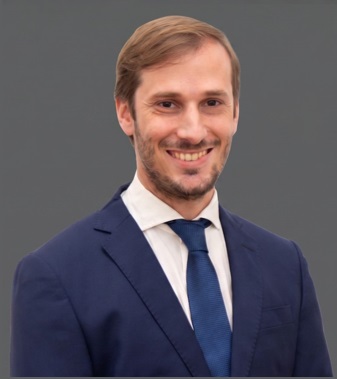
Nicolás Braslovsky

Gianfranco Benedossi
The views, positions, and conclusions expressed in Cefeidas Notebook belong exclusively to the individual authors and do not necessarily reflect the official institutional stance of Cefeidas Group.